

Social Media Marketing is one of the most effective ways for businesses to connect with customers, build brand awareness and create new growth opportunities online. Whether you run a small local shop, a boutique, a restaurant, a coaching business or an online store, social media can help people discover your products and services. With the right strategy, consistent content and a clear understanding of your audience, you can turn your social media presence into a valuable part of your business growth.
Today, customers often check a business’s social media profiles before making a purchase or contacting a service provider. This gives businesses an opportunity to share useful information, demonstrate their expertise and build trust with potential customers.
What Is Social Media Marketing?
Social media marketing is the process of promoting a business, product or service through platforms such as Facebook, Instagram, LinkedIn, YouTube and other social networks.
It involves more than simply uploading photos or videos. A successful strategy includes understanding your audience, planning content, communicating with followers, promoting offers and measuring results.
For example, a boutique can share new collections through Instagram Reels, a restaurant can post food videos on Facebook, and a digital marketing agency can publish educational content that helps business owners understand online promotion.
The main goal is to connect the right message with the right audience at the right time.
1. Builds Brand Awareness and Online Visibility

One of the biggest benefits of social media marketing is that it helps more people discover your business.
Imagine opening a new business in your local area. Without promotion, only a limited number of people may know about it. By sharing useful posts, short videos, product photographs and customer stories, you can introduce your brand to a wider audience.
Consistent branding also helps customers recognise your business. Use your logo, brand colours, business name and communication style consistently across your social media profiles.
When people repeatedly see helpful and relevant content from your business, they have more opportunities to remember your brand.
Image 2 Placement: Add an image after this section showing a small business owner promoting products on Instagram and Facebook.
Alt Text: Social media marketing helping small businesses increase brand awareness and online visibility.
2. Social Media Marketing Helps You Reach the Right Customers
Every business has a particular target audience. A children’s clothing boutique may focus on parents, while a digital marketing company may target entrepreneurs, shop owners and service providers.
Social media platforms provide tools that help businesses understand their audiences and, for advertising campaigns, select relevant audience characteristics.
Before creating content, ask yourself three questions:
- Who are my ideal customers?
- What problems do they want to solve?
- What information would encourage them to trust my business?
For example, a local bakery could share cake designs, customer reviews and festival offers. A digital marketing service could publish tips about website creation, SEO, Google Ads and social media management.
Choosing the right audience helps you create content that feels relevant rather than showing the same message to everyone.
3. Generates Leads and Business Enquiries

Social media can help businesses attract potential customers who are interested in their products or services.
A lead is someone who shows interest in what your business offers. They might send a message, complete a contact form, request a quotation or click a WhatsApp link to ask about your services.
To encourage enquiries, make your next step clear. For example, a post promoting website design services could invite business owners to request a consultation.
You can also use customer testimonials, frequently asked questions, informative videos and service demonstrations to help people understand your offer before contacting you.
However, getting likes and followers does not automatically mean you will receive quality leads. Your content, offer, audience and follow-up process all matter.
Learn more about lead generation for businesses to understand how interested visitors can become potential customers.
Image 3 Placement: Add an image after this section showing a business enquiry arriving through a smartphone or WhatsApp conversation.
Alt Text: Social media marketing generating business leads and customer enquiries through online messaging.
4. Supports Sales and Business Income
Can social media marketing increase business income? It can contribute to sales when your strategy attracts relevant customers and encourages them to take action.
For example, a boutique can share a new collection with product details and ordering instructions. A restaurant can publish menu highlights and special offers. A consultant can share educational posts that demonstrate expertise and invite people to book a service.
The process usually involves three important steps:
- Attract attention: Publish useful, interesting and relevant content.
- Build trust: Share product information, customer feedback and clear answers to common questions.
- Encourage action: Guide interested people towards a purchase, booking, enquiry or website visit.
Track the number of enquiries, completed purchases and revenue generated rather than judging success only by likes.
Remember that results depend on factors such as pricing, product quality, competition, audience needs and the effectiveness of your marketing strategy. Social media is a business growth opportunity, not a guarantee of income.
5. Builds Customer Trust and Long-Term Relationships
Customers want to know who they are buying from. Social media gives businesses a place to communicate directly with their audience and show the people, values and work behind the brand.
You can build trust by answering questions politely, responding to comments, sharing genuine customer feedback with permission and providing accurate product or service information.
For example, a home-based business can share its preparation process, packaging methods or behind-the-scenes activities. A digital marketing agency can explain how it plans campaigns and evaluates performance.
Do not focus only on promotional posts. Share educational information, practical advice and stories that are genuinely useful to your audience.
Trust develops through consistent communication and honest business practices, not through follower numbers alone.
6. Makes Digital Marketing More Effective
Social media works best when it is part of a broader digital marketing strategy.
Your social media content can introduce people to your brand, while your website provides detailed service information and your contact page helps visitors enquire about your services.
You can also combine social media with search engine optimisation, email marketing, Google Ads and content marketing.
For example, a business might publish an educational Instagram Reel, link to a detailed blog on its website and invite visitors to subscribe to an email newsletter.
Explore RIDI Digital Services to learn about digital marketing services such as SEO, Google Ads, website creation and AI videos.
You can also read our guide on how to perform SEO on posts and pages to understand how website content can support your online visibility.
7. Helps You Understand What Customers Want
Social media provides useful feedback about the content and products your audience responds to.
Comments, direct messages, shares, saves, website clicks and enquiries can help you identify customer interests. These signals can guide your future content and marketing decisions.
Suppose you run a clothing boutique and notice that styling videos receive more enquiries than ordinary product photographs. You could test more styling videos and compare the results.
Likewise, if a digital marketing post generates questions about website costs, you could create a detailed article explaining website development packages and the factors that affect pricing.
Review your performance regularly. Keep testing different content formats, messages and offers instead of assuming that one approach will work forever.
8. How to Create a Simple Social Media Marketing Strategy
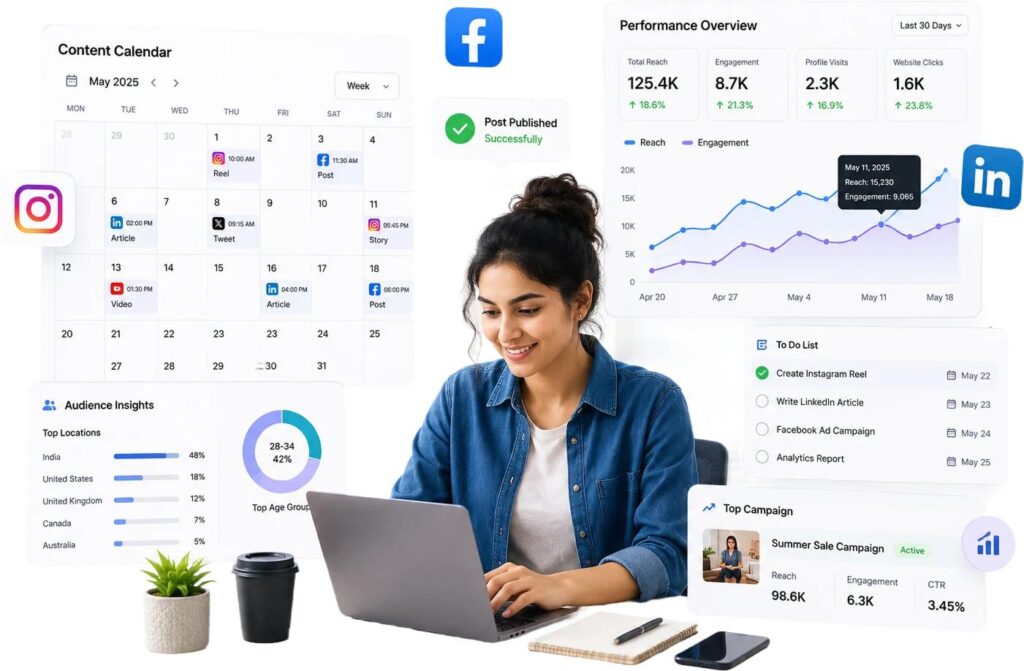
You do not need to be active on every social media platform to begin. Start with the platforms that best match your audience and business goals.
Follow these practical steps:
Step 1: Set a Clear Goal
Decide whether you want to increase brand awareness, generate enquiries, improve website traffic or increase sales. Choose a primary goal so you can measure progress. with social media marketing
Step 2: Plan Useful Content
Prepare a weekly content calendar. Include educational posts, product or service highlights, customer questions, short videos and occasional promotional offers.
Step 3: Choose the Right Platforms in Social Media Marketing
Instagram may suit visual products and Reels, LinkedIn may be useful for professional services, and Facebook may help businesses connect with communities and local customers. Select platforms based on your audience rather than popularity alone.
Step 4: Communicate Consistently
Respond to genuine questions, provide helpful answers and make it easy for interested people to contact your business. Consistency is more valuable than publishing many posts for a short period and then disappearing.
Step 5: Measure and Improve
Review reach, engagement, link clicks, enquiries and sales. Compare results against your original goals and adjust your content accordingly.
Image 4 Placement: Add an image after this section showing a social media content calendar, analytics dashboard and planned business posts.
Alt Text: Social media marketing strategy with content planning, analytics and business performance tracking.
9. Why Professional Social Media Services Can Help
Managing social media takes time. Business owners must balance content creation, customer communication, product or service delivery and daily operations.
Professional social media services can help with content planning, creative design, captions, publishing schedules, audience research, campaign management and performance reporting.
A professional strategy should be tailored to the business rather than using identical posts for every industry. The right approach also depends on the available budget, business goals and target audience.
At RIDI Digital, our digital marketing approach focuses on helping businesses strengthen their online presence through relevant marketing solutions. If you want to improve your business visibility, explore our portfolio or contact us to discuss your requirements.
Frequently Asked Questions
Is social media marketing useful for small businesses?
Yes. It can help small businesses introduce their products, connect with customers, answer questions and generate enquiries. Results depend on the strategy, audience and consistency.
Do I need to pay to start social media marketing?
You can begin with organic posts on many platforms without paying for advertising. Paid campaigns are optional and should be planned according to your goals and budget.
How often should a business post on social media?
There is no single schedule that suits every business. Start with a realistic posting calendar you can maintain, then review performance and adjust the frequency and content.
Can social media marketing increase sales?
It can support sales by attracting relevant audiences, building trust and directing interested customers towards an enquiry or purchase. However, sales are not guaranteed.
Conclusion: Grow Your Business with Social Media Marketing

Digital marketing and social media services supporting business growth and customer engagement.
Social media marketing is more than posting pictures or collecting followers. It is an opportunity to help people discover your business, understand your products or services and build a relationship with your brand.
With a clear strategy, useful content, consistent communication and regular performance reviews, businesses can use social media as an important part of their digital marketing efforts.
Start by understanding your audience, choosing suitable platforms and sharing content that solves real customer problems. Over time, use your results to improve your approach and focus on activities that support your business goals.
Ready to strengthen your online presence? Visit RIDI Digital or contact our team to explore digital marketing solutions for your business.
Your business does not need to be everywhere online. It needs to connect meaningfully with the right people.